

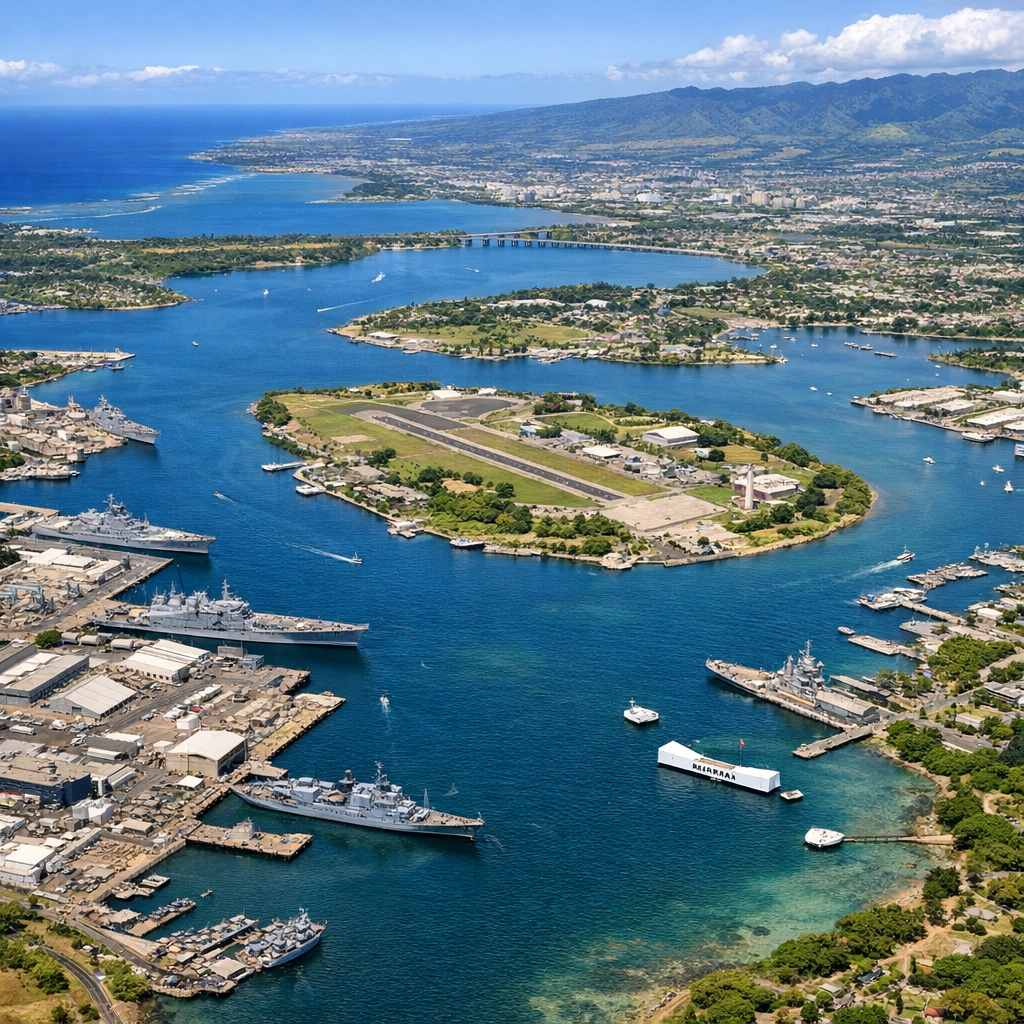
Hawaii’s unique position in the central Pacific Ocean has long established it as a pivotal player in U.S. national affairs, influencing politics, economy, and defense strategies.
Political Landscape
Since achieving statehood in 1959, Hawaii’s political scene has been predominantly shaped by the Democratic Party. The state’s congressional delegation consistently comprises Democrats, reflecting the political inclinations of its residents. This alignment ensures that Hawaii’s interests are well-represented in national policy discussions, particularly concerning issues pertinent to the Pacific region.
Economic Contributions
Hawaii’s economy is multifaceted, with tourism, agriculture, and military expenditures serving as primary pillars. The state’s strategic location facilitates significant international trade, exporting goods and services valued at $4.1 billion annually. This trade supports nearly 200,000 jobs, underscoring Hawaii’s integral role in the national economy. Additionally, the presence of major military installations contributes approximately $15 billion to the state’s economy, creating over 100,000 jobs for local residents.
Defense Significance
Strategically positioned in the Pacific, Hawaii hosts the U.S. Indo-Pacific Command and several other key military facilities. This placement is crucial for national defense, enabling rapid response capabilities across the Asia-Pacific region. The military’s presence not only bolsters national security but also significantly impacts the local economy through job creation and infrastructure development.
In summary, Hawaii’s strategic location and dynamic political and economic landscape make it a vital component of U.S. national affairs, influencing policies and strategies that resonate both domestically and internationally.