

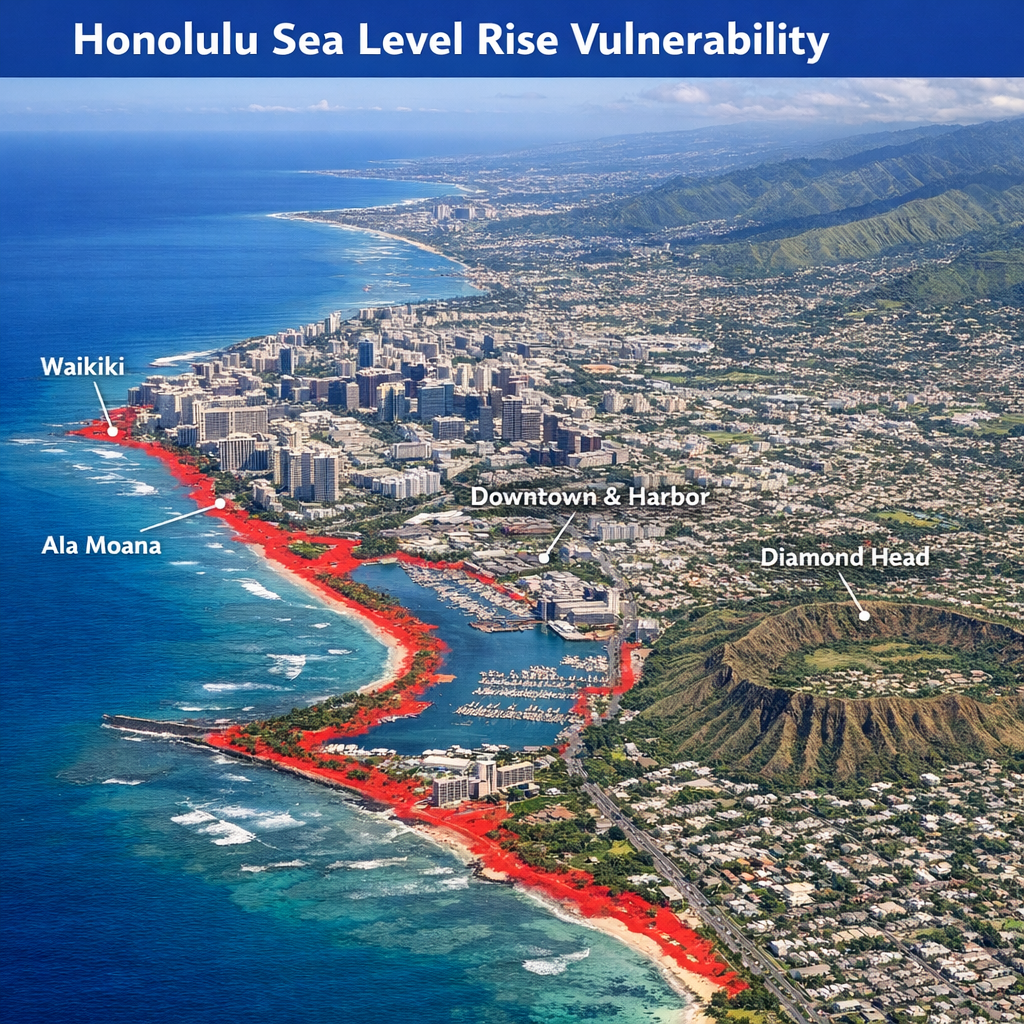
As residents of Honolulu, we are acutely aware of our island’s vulnerability to the changing climate. One of the most pressing concerns is sea level rise, which poses significant threats to our coastal communities, ecosystems, and infrastructure.
Projected Sea Level Rise
According to the Hawaiʻi Climate Change Mitigation and Adaptation Commission, the state is projected to experience approximately 8 inches of sea level rise by 2050 and up to 3.5 feet by 2100. These projections are based on current emission trends and underscore the urgency of addressing climate change. Source
Impacts on Coastal Areas
The anticipated rise in sea levels is expected to exacerbate coastal erosion, increase the frequency of high tide flooding, and threaten vital infrastructure. By mid-century, Hawaiʻi could experience up to 150 high tide flood days per year, significantly impacting daily life and the economy. Source
Adaptation and Mitigation Efforts
In response to these challenges, Hawaiʻi has committed to achieving net-negative greenhouse gas emissions by 2045. Efforts include transitioning to renewable energy sources, enhancing public transportation, and improving energy efficiency. Additionally, the state has developed resources like the updated Sea Level Rise Viewer to aid in coastal planning and resilience building. Source
Understanding and addressing sea level rise is crucial for safeguarding our island’s future. By staying informed and supporting sustainable practices, we can contribute to the resilience of our communities.