

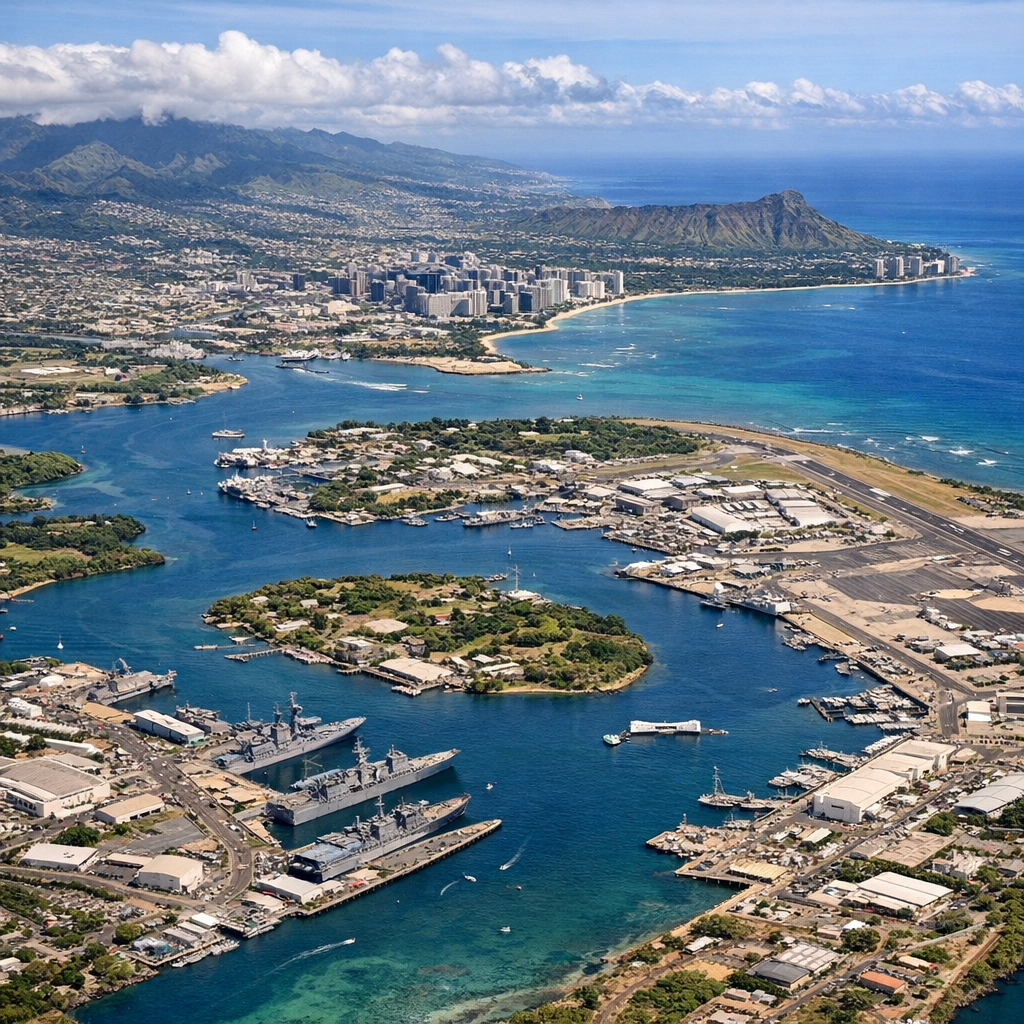
Hawaii, the 50th state of the United States, holds a unique position in national politics and the economy. Its strategic location in the central Pacific Ocean has long made it a pivotal point for military operations and economic activities.
Strategic Military Importance
Hawaii’s central Pacific position allows the U.S. military to reach virtually any point in the Asia-Pacific region faster than from any mainland base. This geographic advantage has driven American interest in the islands since the 1800s. Today, Hawaii hosts several major military installations, including the U.S. Indo-Pacific Command, U.S. Pacific Fleet, and U.S. Marine Forces Pacific. These facilities play a crucial role in national defense strategies, especially given the shift in focus towards the Indo-Pacific region. The military presence not only ensures national security but also significantly contributes to the local economy by providing jobs and supporting local businesses.
Economic Contributions
Beyond its military significance, Hawaii contributes to the national economy through various sectors. Tourism remains a dominant industry, attracting millions of visitors annually and generating substantial revenue. In 2025, Hawaii’s gross state product was $124.6 billion, with tourism contributing a significant portion. Additionally, the state has a growing presence in agriculture, producing commodities like coffee, macadamia nuts, and tropical fruits. Hawaii’s exports, including manufactured products and agricultural goods, support thousands of jobs and contribute to the nation’s trade balance.
Political Landscape
Politically, Hawaii has been a stronghold for the Democratic Party since the mid-20th century. The state’s congressional delegation consists entirely of Democrats, reflecting the political leanings of its residents. Hawaii’s unique cultural and historical background influences its political decisions and policies, often emphasizing environmental conservation, indigenous rights, and social welfare programs.
In conclusion, Hawaii’s strategic location and economic activities make it a vital component of the United States’ national interests. Its contributions to defense, trade, and politics underscore the state’s importance on the national stage.