

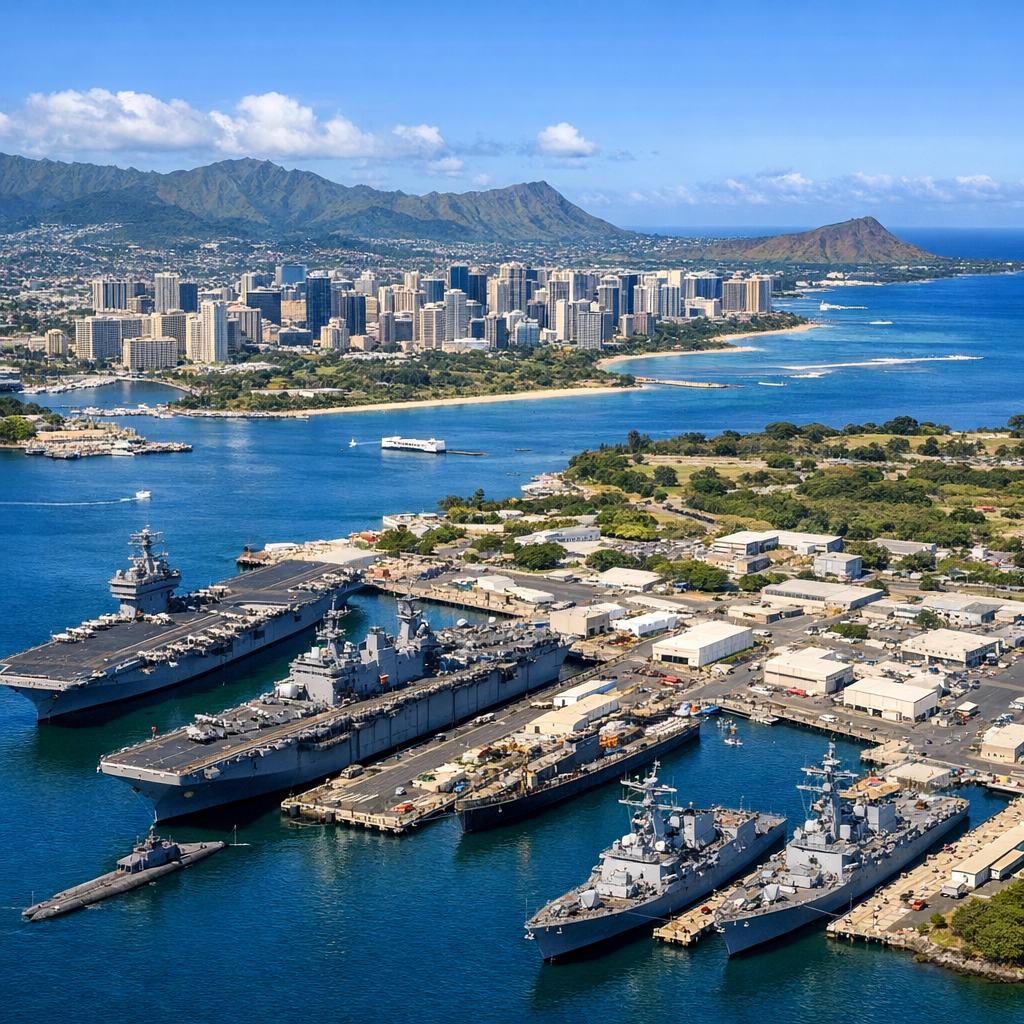
Hawaii, the 50th state of the United States, holds a unique position in the nation’s political and economic landscape. Its strategic location in the central Pacific Ocean has long made it a pivotal point for military operations, trade, and cultural exchange.
Political Landscape
Since achieving statehood in 1959, Hawaii’s political scene has been predominantly influenced by the Democratic Party. The state has consistently elected Democratic representatives to both the U.S. Senate and House of Representatives. As of 2026, Hawaii’s congressional delegation includes Senators Mazie Hirono and Brian Schatz, and Representatives Ed Case and Jill Tokuda, all affiliated with the Democratic Party. This political alignment reflects the state’s progressive values and commitment to issues such as environmental conservation, healthcare, and education.
Economic Contributions
Hawaii’s economy is multifaceted, with significant contributions from tourism, agriculture, and military expenditures. Tourism remains a cornerstone, attracting millions of visitors annually and generating substantial revenue. In 2025, the state’s gross state product was $124.6 billion, with tourism playing a major role in this figure.
Agriculture also plays a vital role, with exports including coffee, macadamia nuts, and tropical fruits. In 2023, Hawaii exported $4.1 billion in goods and services to foreign markets, supporting nearly 200,000 jobs in the state. Notably, 86% of the 663 companies exporting goods from Hawaii were small- and medium-sized enterprises, highlighting the importance of local businesses in the state’s economy.
Military Significance
Hawaii’s strategic location has established it as a central hub for U.S. military operations in the Pacific. The state hosts the U.S. Indo-Pacific Command, headquartered in Honolulu, which plays a crucial role in national defense strategies. Military installations in Hawaii directly employ approximately 61,000 active-duty personnel, civilians, and contractors. Statewide, the direct and indirect impacts of military expenditures generate nearly $15 billion in Hawaii’s economy, creating more than 100,000 jobs for residents.
Energy and Sustainability
Hawaii’s energy consumption is unique due to its geographic isolation. The state consumes 16 times more energy than it produces, with about 90% of its energy consumption derived from petroleum, the highest share among the states. This reliance underscores the importance of developing sustainable energy solutions to ensure long-term economic and environmental stability.
In conclusion, Hawaii’s role in national politics and the economy is multifaceted and significant. Its strategic location enhances its military importance, while its diverse economy contributes to the nation’s overall prosperity. Understanding Hawaii’s unique position helps appreciate its contributions to the broader American narrative.