

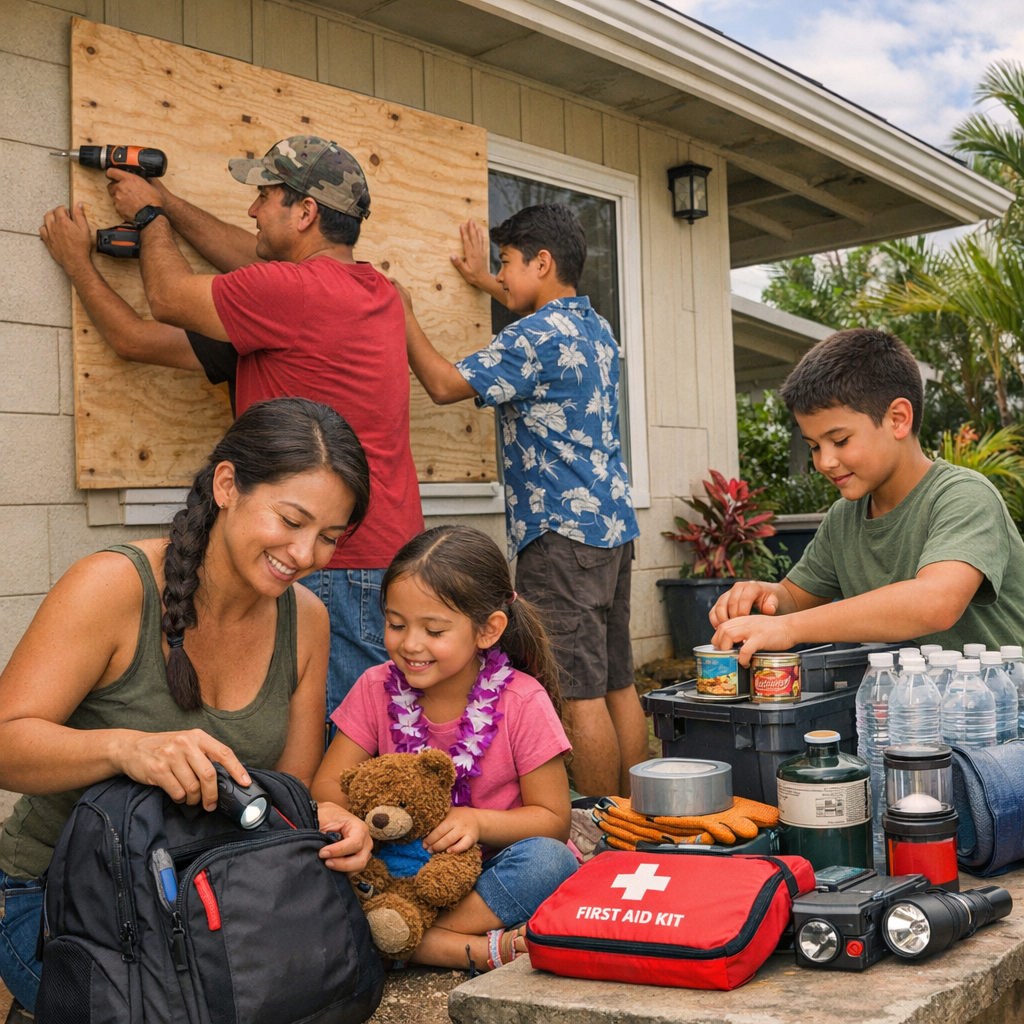
As residents of Hawaii, we are all too familiar with the potential threats posed by hurricanes. The Central Pacific hurricane season officially runs from June 1 to November 30, with the peak period typically occurring between July and October. While hurricanes making direct landfall in Hawaii are rare, it’s crucial to be prepared for any eventuality.
Understanding the Risks
Hurricanes can bring a range of hazards, including high winds, heavy rainfall leading to flooding, storm surges, and dangerous surf conditions. For instance, Hurricane Iniki in 1992 made landfall on Kauaʻi as a Category 4 hurricane with winds of 140 mph, causing significant damage and loss of life. Even if a hurricane doesn’t make direct landfall, its effects can still be felt across the islands.
Steps to Prepare
1. Develop an Emergency Plan
Ensure that all family members know how to respond during a hurricane. Identify safe rooms in your home, establish communication plans, and decide on meeting points in case of separation. Consider the needs of pets and any family members with special requirements.
2. Assemble an Emergency Kit
Prepare a kit with at least 14 days’ worth of supplies, including:
- Non-perishable food and water
- Medications and medical supplies
- Flashlights and extra batteries
- First aid supplies
- Important documents in a waterproof container
- Personal hygiene items
- Cash in small denominations
3. Stay Informed
Monitor local news and weather reports regularly. Sign up for emergency alerts from the Hawaii Emergency Management Agency (HI-EMA) and familiarize yourself with the National Weather Service’s warning systems. Understanding the difference between a hurricane watch (conditions possible within 48 hours) and a hurricane warning (conditions expected within 36 hours) is vital.
4. Secure Your Property
Inspect your home for vulnerabilities. Install storm shutters or board up windows, secure loose outdoor items, and trim trees and shrubs to reduce potential projectiles. Ensure your roof is in good condition and consider reinforcing garage doors.
5. Know Your Evacuation Routes
Identify the nearest evacuation shelters and plan multiple routes to reach them. Keep in mind that not all shelters accept pets, so plan accordingly. If you live in a flood-prone area, be especially vigilant and ready to evacuate if necessary.
Health and Safety Considerations
Floodwaters can be hazardous, containing bacteria and other pathogens. Avoid contact with floodwaters whenever possible. Ensure your tetanus vaccinations are up to date, as injuries during cleanup can expose you to infections. Additionally, maintain your mental and emotional health; disasters can be stressful, and seeking support is important.
By taking these proactive steps, you can help ensure the safety and well-being of your family and community during Hawaii’s hurricane season. Stay prepared, stay informed, and stay safe.