

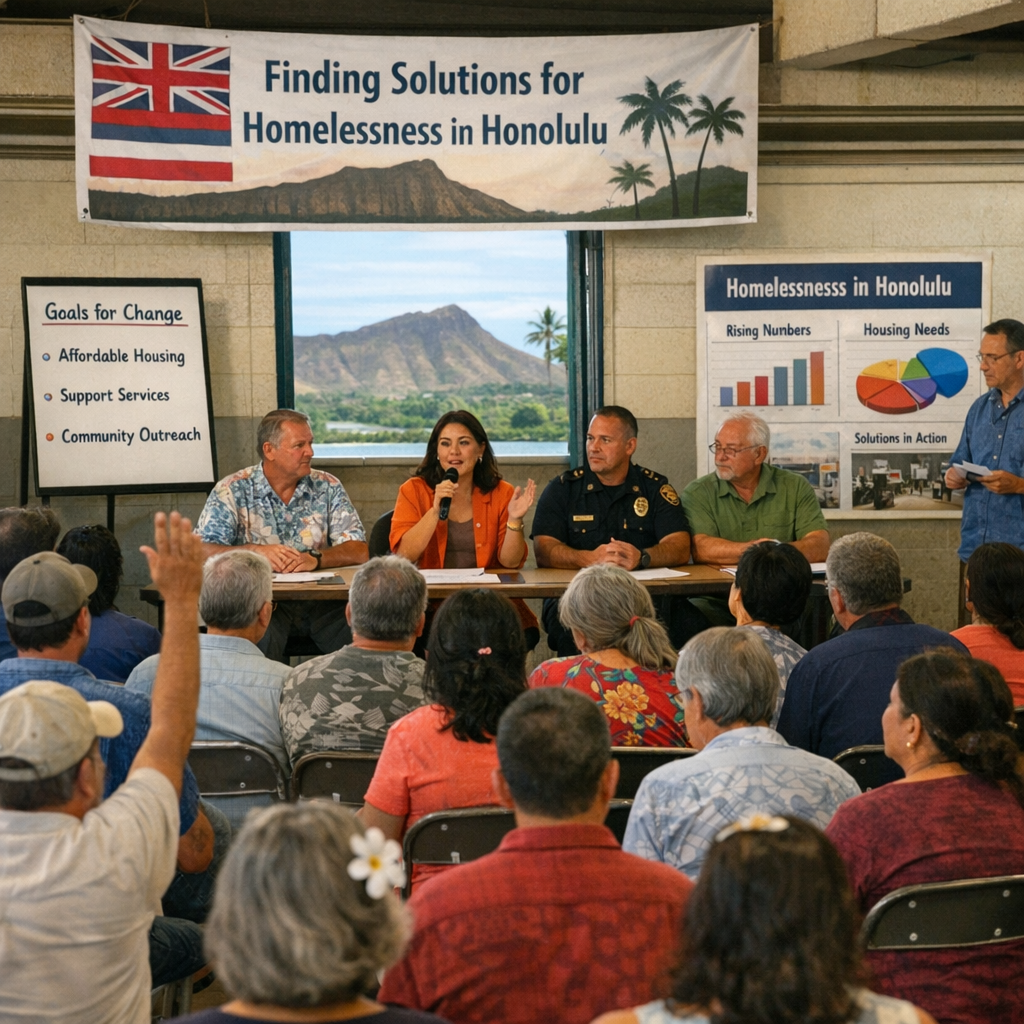
Homelessness remains a pressing issue in Honolulu, with over 4,000 individuals experiencing homelessness on Oahu, as highlighted in the latest Point-in-Time Count. This situation has led to growing concerns among residents, particularly in areas like Downtown Honolulu and Iwilei, where safety and public health are increasingly at risk.
Community-driven initiatives have shown promise in addressing these challenges. For instance, Puʻuhonua o Waiʻanae, a self-organized homeless community near Waiʻanae Boat Harbor, has successfully transitioned to a private 20-acre plot, establishing a permanent village with tiny homes, running water, and communal facilities. This model emphasizes the importance of community involvement and self-governance in creating sustainable solutions.
Similarly, organizations like Palama Settlement have been instrumental in providing social services and recreational programs to the Kalihi and Kāpalama neighborhoods since 1896. Their longstanding commitment underscores the vital role of community centers in supporting vulnerable populations and fostering a sense of belonging.
However, challenges persist. Residents have reported safety concerns linked to homelessness, such as incidents involving individuals with weapons and the presence of encampments in public spaces. These situations highlight the need for comprehensive strategies that address both immediate safety issues and the underlying causes of homelessness.
City officials have initiated efforts to revitalize areas like Chinatown, including increased police presence, additional security measures, and proposed funding for physical improvements. While these steps are commendable, the complexity of homelessness requires a multifaceted approach that combines enforcement with compassionate support services.
Community engagement is crucial in this endeavor. Neighborhood boards, such as the Kalihi-Pālama Neighborhood Board No. 15, play a pivotal role in voicing residents’ concerns and collaborating with city officials to develop tailored solutions. Their active participation ensures that the unique needs of each community are addressed effectively.
In conclusion, while homelessness in Honolulu presents significant challenges, the collective efforts of community organizations, residents, and city officials offer a pathway toward sustainable solutions. By fostering collaboration and prioritizing compassionate, community-driven initiatives, we can work towards a future where all residents have access to safe and stable housing.