

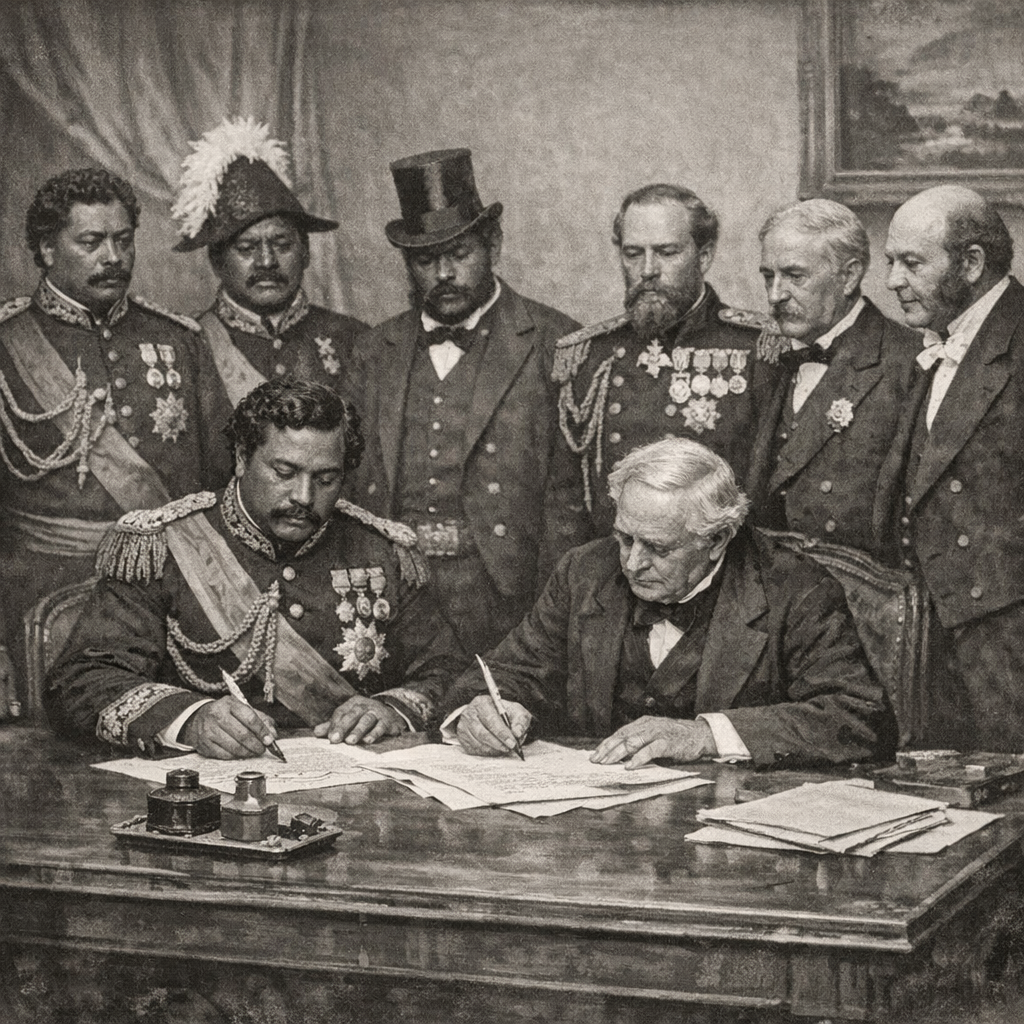
Hawaiʻi’s unique position in the Pacific has long made it a focal point in international relations. From its early days as an independent kingdom to its current status as a U.S. state, Hawaiʻi has played a pivotal role in global affairs.
Early Diplomatic Engagements
In the 19th century, the Kingdom of Hawaiʻi actively pursued diplomatic relations with major world powers. A significant milestone was the signing of a treaty with the United States on December 23, 1826, which marked the formal recognition of Hawaiian independence by the U.S. government. This treaty laid the groundwork for future diplomatic and trade relations between the two nations. [Source: Office of the Historian]
International Recognition and Treaties
Hawaiʻi’s strategic importance was acknowledged by other global powers as well. In 1843, Great Britain and France issued a joint declaration guaranteeing Hawaiian independence, further solidifying its position in the international community. The Kingdom also established treaties with various nations, reflecting its proactive approach to foreign relations. [Source: Office of the Historian]
Modern-Day International Relations
Today, Hawaiʻi continues to be a hub for international engagement. The state’s Department of Business, Economic Development & Tourism (DBEDT) actively fosters global partnerships and trade opportunities to enhance economic growth. Initiatives include sister state relationships, international student attraction programs, and hosting events like the Festival of Pacific Arts & Culture (FestPAC). [Source: DBEDT International Relations]
Educational institutions in Hawaiʻi also contribute to its global presence. The University of Hawaiʻi at Mānoa offers programs in international relations, preparing students to navigate and contribute to the complex landscape of global politics. [Source: UH Mānoa Political Science Department]
Conclusion
Hawaiʻi’s rich history of international engagement underscores its enduring significance in global affairs. From its early diplomatic endeavors to contemporary initiatives, the state continues to bridge cultures and foster international cooperation.