

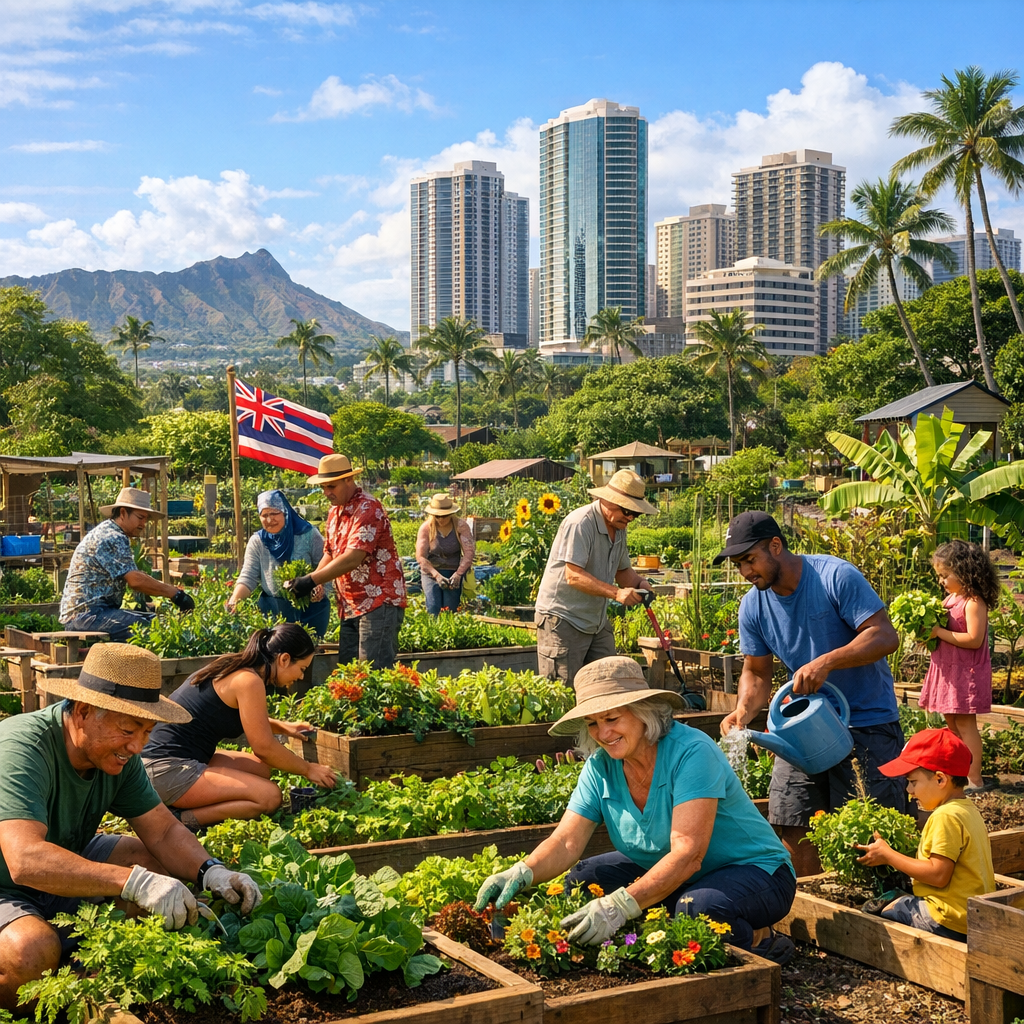
In the heart of Honolulu, amidst the urban landscape, community gardens serve as vital green spaces that bring residents together, promote sustainable practices, and enhance the quality of urban life. These gardens offer individuals the opportunity to cultivate their own produce, connect with neighbors, and contribute to the city’s ecological health.
The Growth of Community Gardens in Honolulu
Honolulu’s community gardening program began in 1975 under Mayor Frank Fasi, aiming to provide residents in densely populated areas access to garden plots. Today, the city boasts several community gardens, including the Makiki Community Garden, the oldest of its kind in O’ahu, located within the Makiki District Park at 1527 Ke’eaumoku St. This garden offers 160 plots, each tended by different gardeners or households, fostering a diverse and vibrant community. [Source]
Recent Developments and Regulations
In May 2025, the Honolulu Department of Parks and Recreation updated the rules governing community gardens for the first time in 40 years. These new regulations aim to improve safety, fairness, and ecological sustainability. Key updates include height limits on fences and trees, more oversight of the waitlist and applications, requirements for new gardeners to begin work at their plots within 14 days of approval, and a ban on herbicides and pesticides. The city is also exploring additional locations to establish more community gardens to meet growing demand. [Source]
Benefits Beyond Gardening
Community gardens in Honolulu offer more than just a space to grow fruits and vegetables. They serve as platforms for education, where residents can learn about sustainable practices, composting, and organic gardening. These gardens also provide a sense of belonging, bringing neighbors together through a shared purpose, and contribute to the beautification of neighborhoods. Additionally, they offer mental and physical health benefits by providing safe, recreational green spaces and opportunities for physical activity. [Source]
Getting Involved
For those interested in joining a community garden, it’s advisable to contact the Honolulu Department of Parks and Recreation for information on available plots and application procedures. Given the popularity of these gardens, there may be waitlists, but the city is actively working to expand the program to accommodate more residents. Engaging in a community garden is a rewarding way to connect with nature, learn new skills, and contribute to the community’s well-being.
Community gardens are more than just plots of land; they are vibrant hubs of activity that enrich the urban environment and foster a sense of community among Honolulu’s residents.