

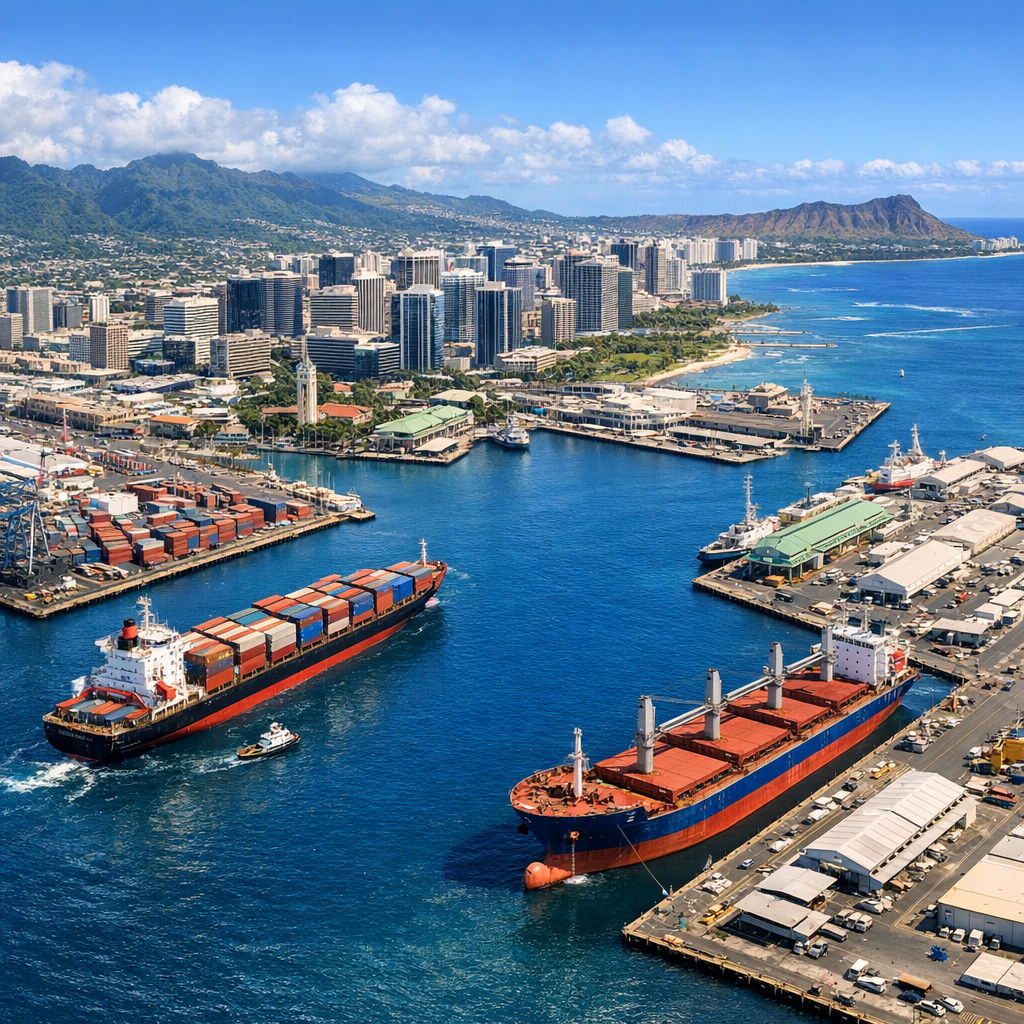
Hawaii’s unique position in the central Pacific Ocean has long established it as a pivotal hub for global trade and international relations. This strategic location not only facilitates commerce between Asia and the Americas but also underscores the state’s significance in geopolitical and economic contexts.
Historical Significance in Trade
Historically, Hawaii served as a vital stopover for merchant ships engaged in the fur trade and later accommodated numerous whaling vessels each season. These activities integrated Hawaii into international commerce and diplomacy, attracting the interests of major powers such as Britain, France, Russia, and the United States. The islands’ agricultural exports, particularly sugar and pineapple, further increased Hawaii’s economic significance. [Source]
Modern Economic Contributions
In recent years, Hawaii’s economy has diversified beyond agriculture. The state exported $395 million worth of goods in 2025, with top markets including Australia, Japan, South Korea, Germany, and Bangladesh. Notably, 86% of the 663 companies exporting from Hawaii in 2023 were small and medium-sized enterprises, highlighting the integral role of local businesses in international trade. [Source]
Military and Diplomatic Importance
Beyond commerce, Hawaii’s strategic location has made it a cornerstone of U.S. military defense. The state hosts the U.S. Pacific Fleet, the world’s largest naval command, and employs approximately 75,000 Defense Department personnel. This military presence underscores Hawaii’s role in maintaining regional stability and its importance in U.S. defense strategy. [Source]
Challenges and Opportunities
While Hawaii’s position offers numerous advantages, it also presents challenges. The state’s reliance on imports—about 85% of consumed goods—makes it vulnerable to global supply chain disruptions. However, this dependency also creates opportunities for local businesses to innovate and expand their reach in international markets. [Source]
In conclusion, Hawaii’s central Pacific location continues to shape its role in global trade and international relations. By leveraging its strategic position, the state can navigate challenges and seize opportunities in an increasingly interconnected world.