

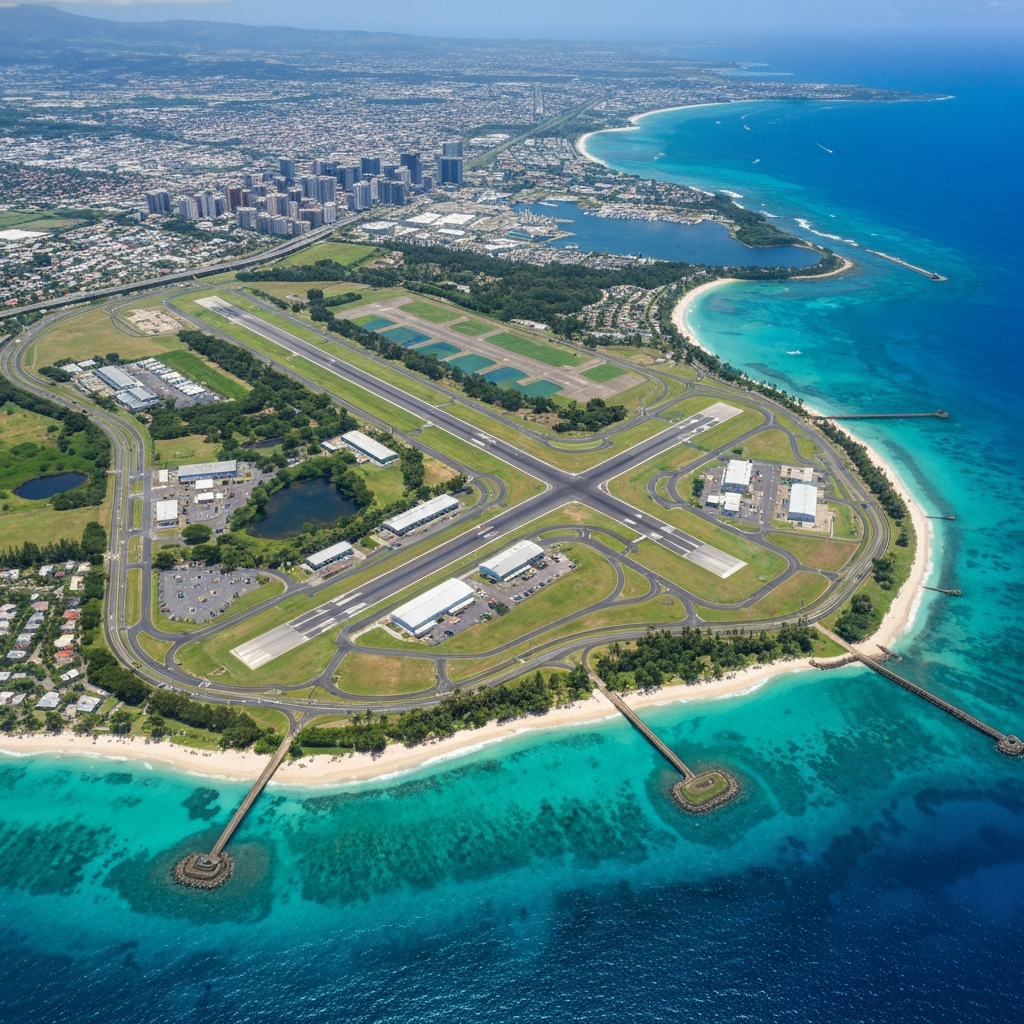
Hawaii’s strategic location in the central Pacific Ocean has long established it as a pivotal player in the United States’ national defense and economic landscape. This unique positioning not only underscores its military importance but also influences its economic dynamics.
Military Significance
Home to the U.S. Indo-Pacific Command, Hawaii hosts several key military installations, including Joint Base Pearl Harbor-Hickam, Fort Shafter, and Camp H.M. Smith. These facilities collectively employ approximately 61,000 active-duty personnel, civilians, and contractors. The presence of these installations contributes nearly $15 billion to Hawaii’s economy, generating over 100,000 jobs statewide. This substantial federal investment underscores Hawaii’s critical role in national security, especially given the strategic shift of U.S. defense focus towards the Indo-Pacific region. [Source: U.S. House of Representatives]
Economic Impact
The military’s presence has a profound effect on Hawaii’s economy. Beyond direct employment, defense spending stimulates various sectors, including construction, retail, and services. The steady flow of defense funds provides economic stability, insulating the state from some market fluctuations. However, reliance on federal spending also poses risks; potential budget cuts could impact local businesses and employment rates. [Source: Hawaii Business Magazine]
Tourism and Diversification
While defense is a cornerstone of Hawaii’s economy, tourism remains a dominant industry, contributing significantly to the state’s gross domestic product. The influx of visitors supports a wide range of businesses, from hospitality to retail. Efforts to diversify the economy have led to growth in sectors like agriculture, technology, and renewable energy. For instance, Maui has seen a rise in information technology ventures alongside its traditional tourism and agricultural industries. [Source: Wikipedia]
Challenges and Opportunities
Hawaii’s economic landscape faces challenges, including high living costs and dependence on imports. The state’s geographic isolation contributes to elevated prices for goods and services. However, initiatives aimed at fostering innovation and self-sufficiency present opportunities for economic resilience. Investments in renewable energy and technology sectors are steps toward reducing reliance on external resources and creating high-value jobs for residents. [Source: NCBI Bookshelf]
In conclusion, Hawaii’s strategic location continues to play a vital role in national defense and economic activities. Balancing the benefits of federal defense spending with efforts to diversify the economy is essential for the state’s long-term prosperity.