

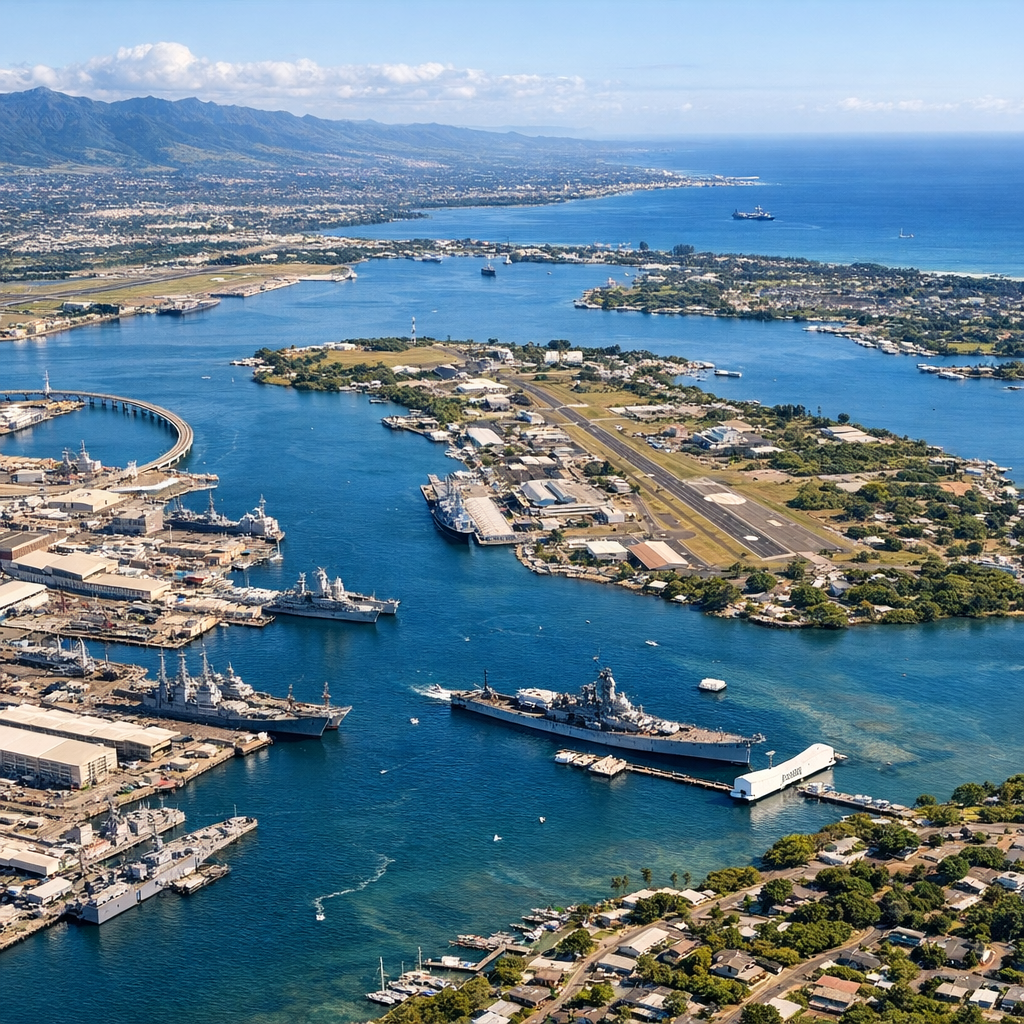
Hawaii’s central location in the Pacific Ocean has long established it as a pivotal asset in the United States’ national security and economic frameworks. This strategic positioning not only bolsters the nation’s defense capabilities but also influences the local economy in profound ways.
Military Significance
As the headquarters for the U.S. Indo-Pacific Command, Hawaii hosts several key military installations, including Joint Base Pearl Harbor-Hickam, Fort Shafter, and Camp H.M. Smith. These facilities are integral to projecting U.S. military power across the Asia-Pacific region. The presence of approximately 61,000 active-duty personnel, civilians, and contractors underscores the state’s critical role in national defense. This military infrastructure contributes nearly $15 billion annually to Hawaii’s economy, supporting over 100,000 jobs statewide.
Economic Impact
The military’s presence has a cascading effect on Hawaii’s economy. Beyond direct employment, defense spending stimulates local businesses through contracts and service demands. The construction industry, for instance, benefits from ongoing infrastructure projects on military bases. Additionally, the influx of military personnel and their families bolsters the housing market and local consumer spending.
However, reliance on federal defense spending introduces vulnerabilities. Budgetary shifts or federal cuts can have immediate repercussions on the state’s economic stability. For example, projections indicate the potential loss of approximately 4,500 federal jobs in Hawaii through the end of 2026, highlighting the need for economic diversification.
Trade and Commerce
Hawaii’s geographic position also makes it a natural hub for trade between the U.S. mainland and Asia. In 2025, the state exported $395 million worth of goods, with top destinations including Canada, Mexico, the United Kingdom, Japan, and Australia. Key exports encompass agricultural products like coffee, macadamia nuts, and pineapples, as well as manufactured goods such as transportation equipment and petroleum products.
Despite these contributions, Hawaii’s export economy faces challenges due to its remoteness and reliance on imports for many goods. The high cost of living, driven by shipping expenses and limited local production, remains a persistent issue for residents.
Looking Ahead
While Hawaii’s strategic importance in national defense and its role in international trade are undeniable, the state must navigate the complexities of economic dependence on federal spending and the challenges of geographic isolation. Efforts to diversify the economy, invest in renewable energy, and support local industries are essential to ensure long-term economic resilience.
Understanding Hawaii’s unique position within the broader national context allows for informed discussions on policy decisions that affect both the state and the nation. As residents, staying engaged with these developments ensures that Hawaii continues to thrive as a vital component of the United States.