

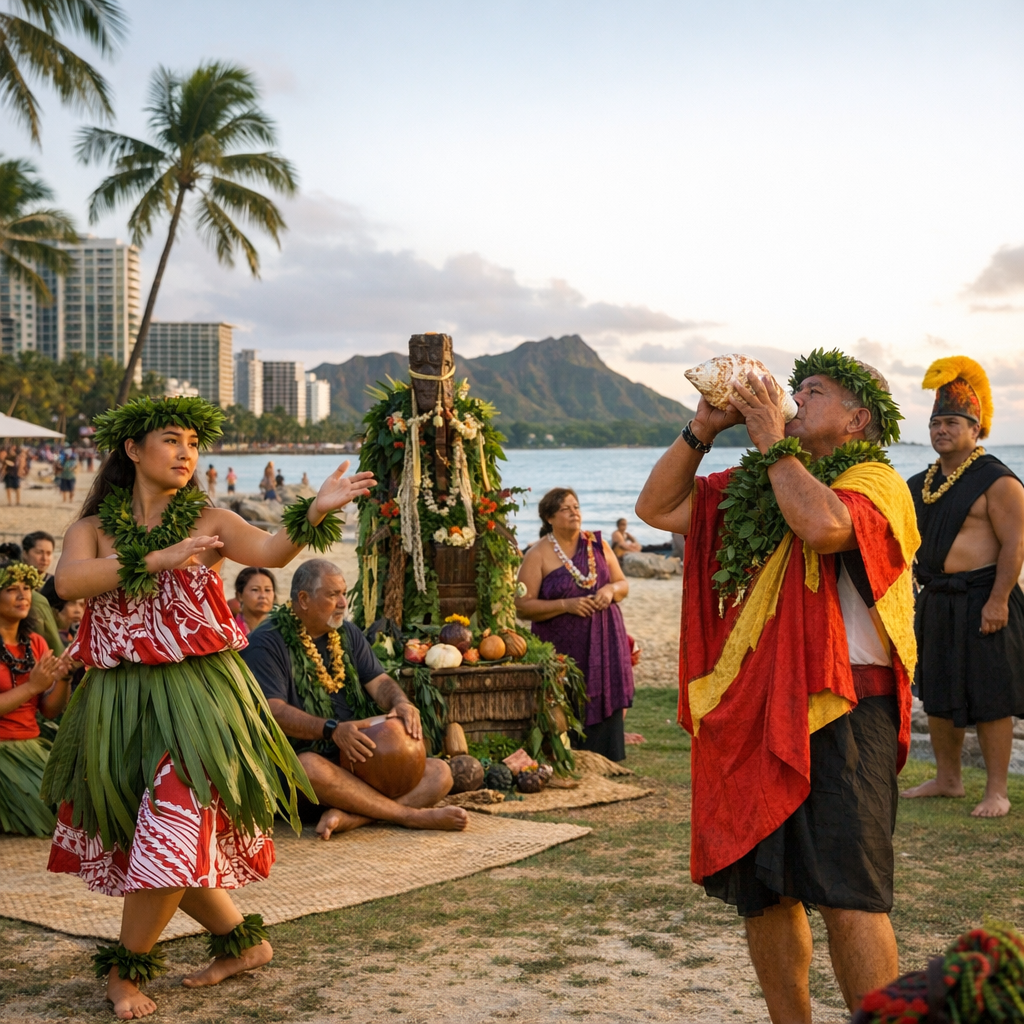
Honolulu is home to numerous community-driven initiatives dedicated to preserving and celebrating Hawaiian culture. These programs play a vital role in ensuring that the rich traditions and practices of the Native Hawaiian people continue to thrive for future generations.
Hawai‘i Tourism Authority’s Kūkulu Ola Program
The Hawai‘i Tourism Authority (HTA) has been instrumental in supporting cultural preservation through its Kūkulu Ola program. In the fiscal year 2026, HTA invested $980,000 to support 26 community-based organizations statewide. This funding aids projects that perpetuate Hawaiian cultural practices, provide educational programming, preserve cultural sites, and build community pride. The application period for the July 2026 to December 2026 project cycle opened on April 9, 2026, with proposals due by May 7, 2026. More information is available on HTA’s website.
Office of Hawaiian Affairs’ Cultural Center Feasibility Study
The Office of Hawaiian Affairs (OHA) has initiated a feasibility study for developing a Native Hawaiian Cultural Center in Kakaʻako Makai. Partnering with AEA Consulting, OHA aims to create a center rooted in community, culture, and the revitalization of Native Hawaiian presence in urban Honolulu. The study involves extensive community engagement to ensure the center reflects shared aspirations and knowledge.
Puʻuhonua Society’s Support for Native Hawaiian Artists
The Puʻuhonua Society, a Native Hawaiian women-led nonprofit organization based in Honolulu, creates opportunities for Native Hawaiian and Hawaiʻi-based artists and cultural practitioners. Their initiatives include Aupuni Space, an artist-run gallery and studios; Hoʻākea Source, a regional regranting program; and KEANAHALA, a collaborative weaving program that perpetuates the Native Hawaiian practice of ulana lauhala (pandanus weaving).
PA‘I Foundation’s Cultural Preservation Efforts
The PA‘I Foundation is dedicated to preserving and perpetuating Hawaiian cultural traditions. They have established a cultural center on O‘ahu to better serve the broader Hawaiian community. Since 2006, the foundation has partnered with the Bishop Museum to launch the Native Hawaiian Arts Market, celebrating Native Hawaiian contemporary artists. This event has grown into Maoli Arts Month (MAMo), a month-long celebration incorporating arts markets, gallery showings, and cultural events throughout downtown Honolulu.
Wahi Pana: Storied Places Public Art Project
Wahi Pana is a temporary public art project by the City and County of Honolulu Mayor’s Office of Culture and the Arts (MOCA). As a winner of the Bloomberg Philanthropies’ Public Art Challenge grant, the project features art installations across O‘ahu that connect each site with indigenous, Native Hawaiian mo‘olelo (stories). Launching in 2025, the project brings together local artists and storytellers to create 11 multimedia installations around the island.
Mokauea Island Restoration Project
In Ke’ehi Lagoon, Mokauea Island is the site of O’ahu’s last Hawaiian fishing village. The Mokauea Island Restoration Project, led by Kai Makana since 2005, aims to environmentally and culturally restore the island. The goal is to recreate a living example of a traditional Hawaiian subsistence fishing village, preserving maritime skills and knowledge for future generations.
Maunalua Fishpond Heritage Center’s Restoration Efforts
The Maunalua Fishpond Heritage Center works to protect, preserve, and restore remaining Hawaiian fishponds, springs, and cultural sites in Maunalua Bay. They manage Kānewai Spring in Kuli’ou’ou and Kalauha’iha’i fishpond in Niu Valley, caring for native species and reconnecting the community to ancestral practices. Their efforts aim to revive Native Hawaiian fishponds and honor the past to nourish the future.
These initiatives, among others, highlight the ongoing commitment of Honolulu’s community to honor and perpetuate Hawaiian culture. Through collaborative efforts, these programs ensure that the traditions, practices, and values of the Native Hawaiian people continue to enrich the community and provide authentic experiences for residents and visitors alike.