

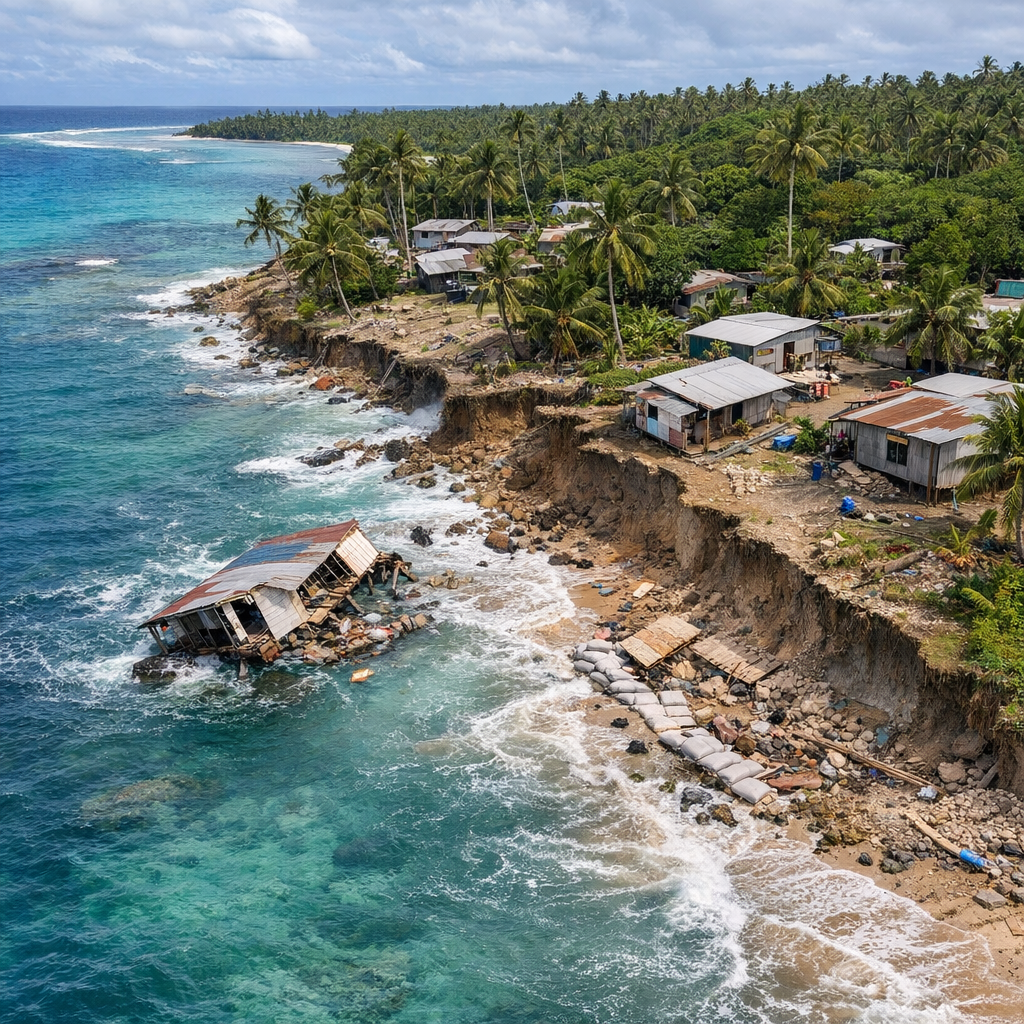
Pacific Island nations are increasingly vulnerable to the multifaceted impacts of climate change, including rising sea levels, ocean warming, and acidification. These environmental changes pose significant threats to the region’s ecosystems, economies, and communities.
Accelerated Sea-Level Rise
Sea levels in the Pacific have been rising at rates exceeding the global average. Since 1993, certain areas of the western tropical Pacific have experienced sea-level increases of approximately 10-15 cm, nearly double the global rate. This rapid rise endangers low-lying islands, leading to coastal erosion, increased flooding, and the potential displacement of communities.
Ocean Warming and Acidification
The Pacific Ocean has absorbed more than 90% of the excess heat from greenhouse gas emissions, resulting in significant ocean warming. This warming, coupled with acidification, adversely affects marine ecosystems, particularly coral reefs. Coral bleaching events have become more frequent and severe, threatening biodiversity and the livelihoods of communities dependent on these ecosystems.
Impacts on Freshwater Resources
Rising sea levels contribute to saltwater intrusion into freshwater lenses, contaminating vital water supplies. This intrusion, combined with changing rainfall patterns and increased drought frequency, jeopardizes water security for many Pacific Island communities.
Adaptation and Resilience Efforts
In response to these challenges, Pacific Island nations are implementing various adaptation strategies. These include developing early warning systems, constructing resilient infrastructure, and integrating traditional knowledge with scientific approaches to enhance community resilience.
As residents of Honolulu, we share cultural and environmental ties with our Pacific neighbors. Understanding and supporting their efforts to combat climate change is crucial for the collective well-being of our region.